
The Simple ADHD Tool You're Probably Overlooking: A Guide to Using Timers and Clocks
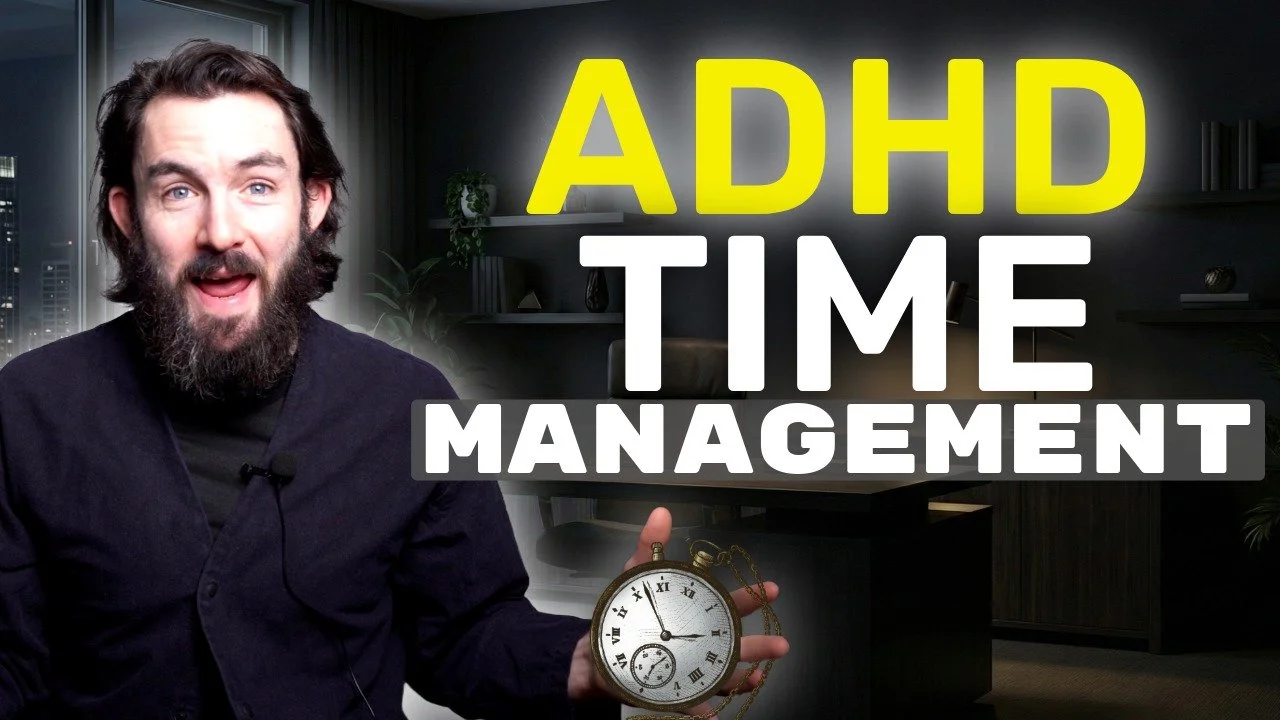
If you're a working professional in New York City juggling deadlines, meetings, and the constant hum of urban life, you already know that time can feel like it's moving at two speeds simultaneously—either crawling or disappearing entirely. Add ADHD to the equation, and time management becomes less of a challenge and more of a daily mystery.
You might think a project will take ten minutes, only to look up three hours later wondering where the day went. Or you underestimate how long your morning routine takes and find yourself perpetually late despite your best intentions. If this sounds familiar, you're not alone—and there's a surprisingly simple tool that can help.
Why Time Feels Broken When You Have ADHD
When we talk about ADHD, we're really talking about differences in executive functioning. These are the mental processes that help us plan, organize, make decisions, control impulses, and yes—estimate and track time. For people with ADHD, these functions are significantly impacted, which is why time can feel so slippery.
You might be what we call "time optimistic," consistently underestimating how long tasks will take. Or perhaps you're "time pessimistic," assuming everything will take forever and feeling paralyzed before you even start. Either way, the struggle is real, and it affects everything from your work performance to your personal relationships.
Here's what most people don't realize: the passage of time is something neurotypical brains track somewhat automatically. But when you have ADHD, that internal clock doesn't work the same way. Minutes can feel like hours, or hours can evaporate like minutes. You can become so hyperfocused on something engaging that you completely lose track of time, missing appointments or neglecting other important tasks.
The Solution: Externalizing What Your Brain Can't Do Internally
This is where timers and clocks come in—and I know what you're thinking. "That's it? That's the big solution?" Hear me out.
The reason timers and clocks are so effective for ADHD isn't because they're fancy or complex. It's because they externalize executive functions that your brain struggles to manage internally. Instead of relying on your internal sense of time (which, let's be honest, isn't reliable), you're creating external structure that does the work for you.
Think of it this way: if you had trouble seeing, you'd wear glasses. You wouldn't try to force your eyes to work better through sheer willpower. The same principle applies here. When your brain struggles to track time, you create external tools that make time visible and manageable.
Making Timers and Clocks Part of Your Daily Life
Before we dive into specific strategies, there's one crucial step: you need to integrate timers and clocks into your life the same way you've integrated your phone or wallet. They need to become non-negotiable, everyday tools.
For some people, the timer and clock apps on their phone work perfectly. For others, a physical egg timer or a visual clock that shows time passing creates a more tangible connection. Some of my clients in New York swear by voice-activated timers—there's something about saying "Hey Siri, set a timer for 20 minutes" that makes it feel effortless and keeps them on track throughout their busy days.
The key is finding what you'll actually use. Not what looks coolest or what your favorite productivity guru recommends, but what feels natural enough that you'll reach for it consistently.
Six Powerful Ways to Use Timers for ADHD
1. Create Decision Points Throughout Your Day
One of the biggest challenges with ADHD is getting stuck in hyperfocus on something engaging while neglecting less exciting (but equally important) tasks. Maybe you're deep into a creative project but you also need to make restaurant reservations or respond to an important email.
Set a timer for however long you want to work—say, two hours. When that alarm goes off, you're not necessarily stopping. You're creating a decision point. You can choose to keep going, or you can use that moment to pivot to the task you've been avoiding. Without that alarm, you might not surface until it's too late.
Pro tip: Place your timer across the room. Having to physically get up to turn it off creates an even clearer break in your focus and makes the decision point more definitive.
2. Collect Real Data About Your Time
Here's an exercise that feels tedious at first but pays dividends: for two to three weeks, time your repetitive tasks. How long does your morning routine actually take? What about answering emails, commuting to your coworking space in Manhattan, or preparing dinner?
Most people with ADHD are working off feelings and guesses rather than data. You think getting ready takes 20 minutes, so you give yourself 20 minutes, and then you're consistently late and frustrated with yourself. But what if it actually takes 45 minutes?
By timing these tasks and keeping a simple spreadsheet, you replace guesswork with truth. Yes, it requires some upfront effort. But once you have this data, you can plan your days and weeks around reality instead of wishful thinking.
3. Build Accurate Time Blocks
Once you have real data about how long tasks take, you can create a calendar that actually works. This is where ADHD therapy often focuses—not just on understanding your challenges, but on building systems that accommodate them.
If you know your morning routine is 45 minutes, your gym session is an hour and fifteen minutes, and answering emails typically takes 30 minutes, you can build a schedule that's grounded in reality. Your calendar becomes a tool that helps you instead of another source of shame when you can't stick to unrealistic time blocks.
4. Make Time Visible
Visual timers—the kind that show time passing by filling in or shading sections—can be incredibly powerful. Watching a timer count down or seeing the shaded area grow gives you a concrete, visual representation of something your brain struggles to feel internally.
This is especially helpful during focused work sessions. If you're working on a project and you can see that 30 of your 45 minutes have passed, it creates awareness without pulling you completely out of your focus. You can gauge your progress and adjust accordingly.
5. Stay on Task with Scheduled Timers
Throughout your day, set timers that match your calendar blocks. If you've scheduled 25 minutes for lunch, set your timer for 20 minutes. If you have 45 minutes at the gym, set it for 35 minutes.
Voice activation makes this seamless. You can sit down at your desk and say, "Hey Siri, set a timer for 20 minutes for emails," and then you're off. When the alarm goes off, you know it's time to wrap up and move to your next block. The sound becomes your external cue for transitions—something that's often difficult for people with ADHD to navigate smoothly.
6. Structure Your Unstructured Time
This might be the most underrated strategy: using timers during breaks, free time, or leisure activities. It sounds counterintuitive—why would you time your relaxation? But here's the thing: people with ADHD often struggle with unstructured time. A 15-minute break becomes a two-hour YouTube rabbit hole, and suddenly your entire afternoon is derailed.
Set a timer for your break. Watch Netflix, scroll social media, do whatever you want within that container. When the timer goes off, you have a clear decision point. You can choose to extend your break, but at least you're making an active choice rather than accidentally losing hours.
The Real Victory
When you start using timers and clocks strategically, something shifts. The constant anxiety about time—Am I late? Did I forget something? How long have I been doing this?—begins to quiet down. You're not trying to force your brain to do something it's not wired to do. Instead, you're creating external support that works with your brain, not against it.
For working professionals in New York, where every minute feels accounted for and the pressure to perform is intense, this kind of support can be life-changing. You show up on time. You remember to eat lunch. You finish projects without the last-minute panic spiral. You create space for both the work you need to do and the rest you deserve.
Getting Support for ADHD in New York
If time management is just one piece of a larger struggle with ADHD, you don't have to figure it all out alone. At PRGRS Therapy, we specialize in ADHD therapy for working professionals throughout New York. Whether you're in the Upper East Side, Brooklyn, Queens, or anywhere in the state, our virtual therapy sessions make it easy to get the support you need without adding another commute to your day.
We understand the unique pressures facing professionals in New York—the fast pace, the high expectations, the constant juggling of responsibilities. Our approach is practical, compassionate, and grounded in evidence-based strategies that actually work.
ADHD therapy isn't about fixing you or making you neurotypical. It's about understanding how your brain works and building systems that help you thrive. Timers and clocks are just one piece of that puzzle, but they're a powerful one.
Ready to take the next step? Book a free consultation with our team at PRGRS Therapy. Let's talk about what's getting in your way and how we can help you build a life that works for your brain, not against it.
